

Receiving your screening results and being told you have low PAPP-A can feel incredibly overwhelming, especially during such a precious time. Suddenly, you’re faced with a medical term you may have never heard before, and the wait between NHS appointments can leave you feeling anxious and alone with your worries. We understand completely, and we want you to know that you are not on your own with these feelings.
That’s why we’ve created this reassuring guide specifically for parents-to-be in and around Mansfield. Here, we will gently walk you through what a low PAPP-A result really means for your pregnancy journey, cutting through the clinical jargon to give you clear, simple answers. We’ll outline what you can expect from your ongoing care and explain how our private scans can offer extra reassurance and a chance to bond with your baby, giving you the peace of mind you so deserve.
Key Takeaways
- Understand what a low papp a result means for your pregnancy and why it simply signals the need for some extra, watchful care.
- Learn the typical NHS care pathway you can expect in Mansfield and Nottinghamshire, including who you’ll hear from and what the next steps are.
- Discover how private growth and wellbeing scans can offer valuable peace of mind by complementing the monitoring provided by your NHS team.
- Find out how our local, CQC-registered clinic provides expert support and gentle reassurance for parents-to-be in our community.
Understanding Your Low PAPP-A Result: A Gentle First Look
Hearing that any part of your screening results is ‘low’ can feel worrying, and it’s completely normal to feel a wave of anxiety. Please take a gentle breath. The first and most important thing to know is that the vast majority of pregnancies with a low papp a result continue perfectly and end with the birth of a healthy, happy baby. This result is simply a signpost, not a destination, and we’re here to help you understand what it means.
PAPP-A stands for Pregnancy-Associated Plasma Protein-A. It’s a crucial protein made by your placenta during pregnancy. Think of it as one of the many dedicated workers ensuring your baby gets everything they need to grow and thrive. This result doesn’t mean something is wrong; it simply means your level was measured to be below the expected average for your specific week of pregnancy, which is why your midwife or doctor may recommend closer monitoring.
What is PAPP-A and why is it measured?
Your body produces PAPP-A to support the healthy function of your placenta, which is your baby’s lifeline. It’s measured as part of the combined screening test offered on the NHS, usually between 11 and 14 weeks. This test looks at a few different markers in your blood, including PAPP-A, and combines them with your nuchal translucency (NT) scan measurements. For those wanting a deeper scientific overview, you can find more information by Understanding PAPP-A and its function as a biochemical marker. Crucially, it is a screening marker that helps build a picture of your pregnancy’s health; it is not a diagnosis of any specific condition.
What does ‘low’ mean in numbers? (MoM Explained)
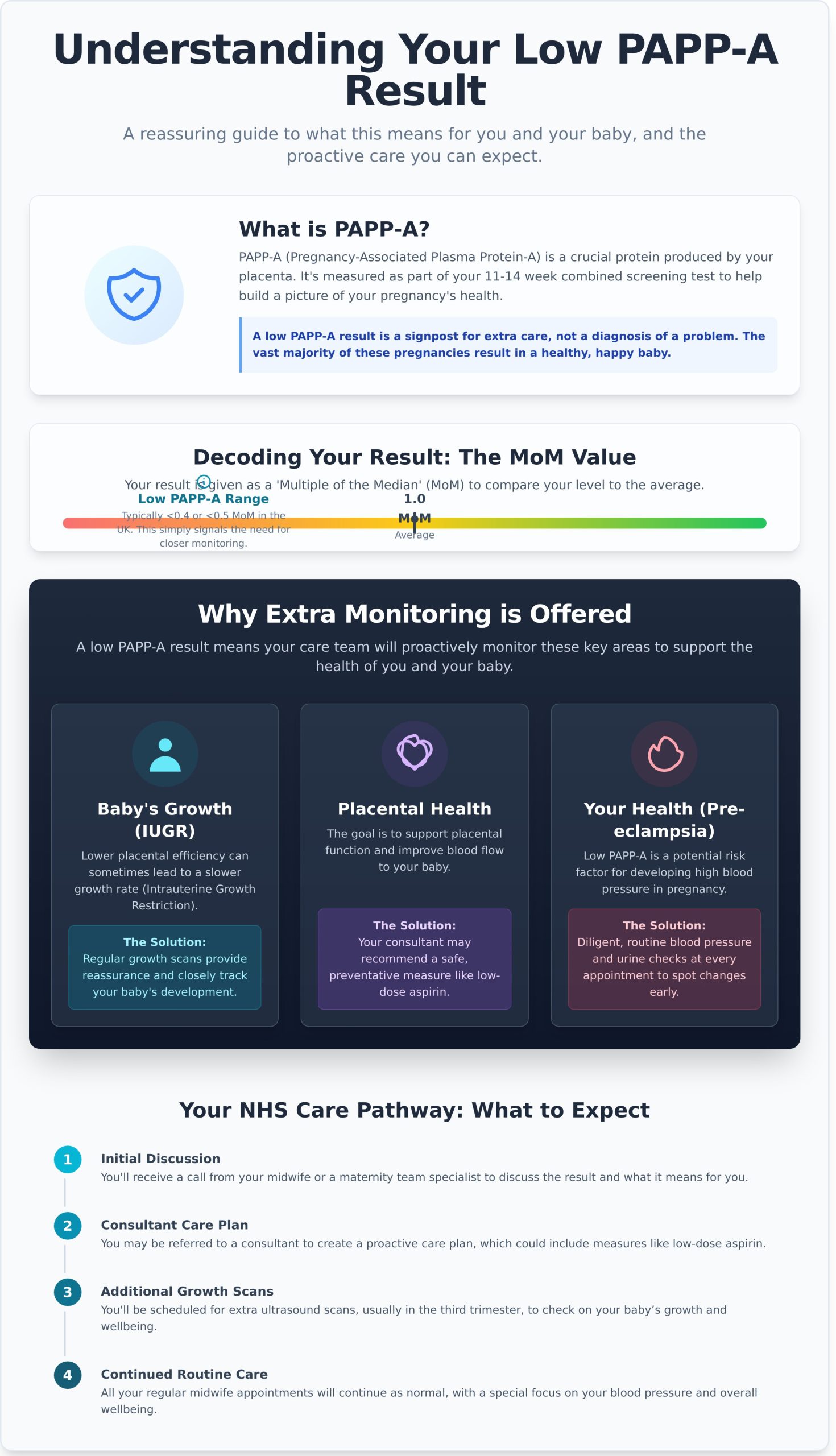
Your results are often given as a ‘MoM’ value, which stands for ‘Multiples of the Median’. It’s a straightforward way to standardise results. The ‘median’ (1.0 MoM) is the average PAPP-A level for pregnancies at your exact gestational age. Your number shows how your level compares. In the UK, the threshold for a low papp a result is typically considered to be below 0.4 or 0.5 MoM. This number is just one piece of information and, on its own, does not predict a specific outcome. It simply provides your care team with a reason to offer you extra support and monitoring, giving you more peace of mind as your journey continues.
Potential Implications: What Doctors Look For
Receiving a result of low papp a can feel worrying, but it’s important to understand what it truly means. This result isn’t a diagnosis of a problem; instead, it’s a gentle signal that your placenta may need a little extra attention as your pregnancy progresses. The PAPP-A protein is produced by the placenta, and lower levels can sometimes indicate that it isn’t working at 100% efficiency. This simply means your maternity team will offer you closer monitoring to ensure both you and your baby are getting the best possible care, giving you valuable peace of mind.
The key is to remember that these are simply possibilities to monitor, not certainties. The vast majority of women with low PAPP-A go on to have perfectly healthy pregnancies and babies.
Baby’s Growth (IUGR)
One of the main roles of the placenta is to deliver nutrients to your baby. If it’s working a little less efficiently, your baby might grow at a slower pace. This is known as Intrauterine Growth Restriction (IUGR). To keep a close eye on this, you’ll be offered extra ultrasound scans later in your pregnancy. These growth scans are a wonderful opportunity to see your baby again and provide the reassurance that they are thriving and getting everything they need.
Blood Pressure and Pre-eclampsia
Low PAPP-A is considered one of many potential risk factors for developing pre-eclampsia, a condition related to high blood pressure in pregnancy. This is why your midwife and care team are already so diligent about checking your blood pressure and urine at every single appointment. This routine monitoring is a core part of antenatal care in the UK and ensures any changes are spotted and managed early, long before they become a concern.
Proactive Care for You and Your Baby
To give your placenta the best support, your consultant may recommend a proactive care plan. This can sometimes involve taking a low-dose aspirin each day, which can help improve blood flow to the placenta. This is a common and safe preventative measure. This entire approach is designed to be proactive, reducing the slightly increased chances of premature birth or a lower birth weight. This enhanced monitoring is standard practice, and you can learn more about what to expect from Your NHS Care Pathway. Every step is taken to provide a safety net, ensuring the best and healthiest outcome for you and your precious baby.
Your NHS Care Pathway in Mansfield & Nottinghamshire
Receiving the news that you have low PAPP-A can feel overwhelming, but please know you are not alone, and there is a clear, supportive pathway ahead. Shortly after your result, you can expect a call from your community midwife or a specialist from the maternity team at Sherwood Forest Hospitals NHS Foundation Trust. Their goal is simple and reassuring: to keep a closer, loving eye on you and your baby, ensuring you both have the extra support you deserve throughout this precious journey.
Referral to a Consultant
One of the first steps will be moving you to a consultant-led care plan. This is a standard and positive measure designed to provide you with specialised oversight from an obstetrician. While for most families a low papp a result leads to a perfectly healthy pregnancy and baby, it is recognised as a marker that warrants extra attention. This is because studies have identified a potential link to certain adverse pregnancy outcomes, so your NHS team proactively provides this higher level of care for your peace of mind.
At your first appointment, feel empowered to ask questions. Consider asking:
- What does this care plan look like for me specifically?
- How often will I be seen and who will I meet?
- Are there any lifestyle recommendations you would suggest?
If more questions come to mind after your appointment, telehealth services can be a convenient way to get answers without a long wait. While based in Canada, the service askmydoc.ca is a great example of how virtual doctor appointments can provide families with timely support and information.
Extra Growth Scans in the Third Trimester
The most tangible part of your new care plan involves extra ultrasound scans, typically starting from around 28-32 weeks. These growth scans are the primary tool used to monitor your baby’s wellbeing and are a wonderful opportunity for you to see your little one again. A specialist sonographer will carefully check several key markers to ensure everything is progressing beautifully:
- Your baby’s growth: Measuring their head, abdomen, and leg bone to estimate their weight.
- Amniotic fluid levels: Ensuring there is a healthy amount of fluid surrounding your baby.
- Placental function: Using Doppler ultrasound to check the blood flow from the placenta through the umbilical cord.
These extra glimpses provide invaluable reassurance, confirming that your baby is thriving and getting everything they need as you approach your due date.
Finding Extra Reassurance: How Private Scans Can Help
The journey through pregnancy is filled with precious moments, but it can also have periods of uncertainty. Waiting for NHS appointments or follow-up scans, especially after your initial screening, can be a significant source of anxiety for many Mansfield parents. While the care provided by the NHS is essential, private scans offer a complementary way to find peace of mind and feel more connected to your baby during these waiting periods.
Think of it not as a replacement for your NHS care, but as an extra layer of support, designed to put you back in control of your pregnancy journey. It’s an opportunity to check in on your little one, ask questions in a relaxed environment, and simply enjoy seeing them again.
More Time, Fewer Worries
One of the greatest benefits of a private scan is the gift of time. Our appointments here in Mansfield are longer, allowing you the unhurried space to truly understand what you’re seeing on the screen. This extra time is invaluable, especially if you’re navigating the complexities of a screening result like low papp a and have questions for our expert sonographers. We can provide reassurance by checking on your baby’s growth and wellbeing between your standard 12 and 20-week NHS scans, helping to bridge the gap and ease your worries.
Advanced Imaging and a Bonding Experience
Using advanced ultrasound technology, we can offer a beautifully clear window into your baby’s world. But for us, it’s about more than just diagnostics. We transform a clinical check-up into a positive and memorable bonding experience for you and your family. Seeing your baby’s tiny movements and hearing their heartbeat in high definition is a magical moment that reinforces the incredible journey you are on. These scans are designed to celebrate your baby’s progress and give you the confidence you deserve.
If you’re looking for that extra reassurance, especially if you have concerns following a finding of low papp a, our specialist scans can help monitor your baby’s development. See how our Growth & Wellbeing Scans can offer you complete peace of mind.
Your Local Plan at Scan Baby Mansfield
Navigating your pregnancy journey, especially with new information to consider, can feel overwhelming. At Scan Baby Ltd, we are your local, CQC-registered private clinic right in the heart of Mansfield, here to offer clarity and support. We’ve created a calm, welcoming space where you can feel comfortable asking questions and taking the time you need. Our qualified, specialist sonographers understand the local NHS pathway and are dedicated to providing gentle, expert reassurance tailored to your unique circumstances. We believe every parent deserves to feel informed and empowered, and our primary goal is to answer your questions, calm your worries, and help you focus on the joy of your pregnancy.
Recommended Scans for Low PAPP-A
Receiving a result for low papp a can naturally lead to questions about your baby’s development and placental function. We are here to provide the detailed monitoring that offers profound peace of mind. Our Growth & Wellbeing Scans are perfectly designed to provide this reassurance. During these appointments, we carefully check on your baby’s progress, measuring their size and observing crucial blood flow to the placenta (umbilical artery doppler). This gives a clearer picture of how well they are being supported. For parents seeking a deeper level of confidence regarding chromosomal health following a combined screening result that included low papp a, our advanced NIPT screening offers highly accurate results. We provide a comprehensive report from every scan for you to share with your NHS midwife, ensuring your care is seamless and collaborative.
Booking Your Peace of Mind Appointment
Taking the next step is simple and designed to be stress-free. You can book your appointment with us online in just a few clicks or by giving our friendly team a call to discuss your needs. You’ll find our calm and welcoming clinic conveniently located on Toothill Lane in Mansfield, with accessible parking nearby. Importantly, you don’t need a doctor’s referral to book a reassurance scan with us, giving you direct access to the answers you need, when you need them. From the moment you walk through our doors, our focus is on you and your baby. Let us help you turn uncertainty into confidence and create a precious bonding moment for your growing family.
Book your reassurance scan in Mansfield today and let our gentle experts take care of you.
Your Reassuring Path Forward in Mansfield
Receiving a low papp a result can feel unsettling, but it’s important to remember it’s simply a signpost for extra care, not a definitive diagnosis. Your dedicated NHS team in Mansfield and Nottinghamshire has a supportive plan in place for you, and for many, pregnancy continues beautifully with this additional monitoring. The key is to stay informed and feel empowered on your unique journey.
For those moments when you seek extra reassurance between appointments, we are here for you. At Scan Baby, our CQC Registered clinic offers a calm and welcoming space to connect with your little one. Our qualified and experienced sonographers, located conveniently in Mansfield town centre, provide detailed scans that focus on your baby’s wellbeing, offering you that invaluable peace of mind. We invite you to Book a Growth & Wellbeing Scan in Mansfield for peace of mind and enjoy a precious glimpse of the miracle on the way.
Remember to be gentle with yourself. This is just one part of your story, and a beautiful new chapter is waiting to unfold.
Your Low PAPP-A Questions Answered
Is low PAPP-A a serious problem?
Receiving this result can feel worrying, but it’s important to know that low PAPP-A is a marker, not a diagnosis. It simply indicates that your pregnancy may benefit from some extra monitoring. It can be linked to how the placenta is functioning, so your midwife or consultant may recommend additional growth scans later on. This is a proactive step to ensure your baby is thriving and to give you valuable peace of mind on your journey.
Can low PAPP-A levels correct themselves or go up later in pregnancy?
The PAPP-A test is a snapshot taken during your first trimester screening, reflecting placental function at that specific moment. Because the measurement is from that point in time, the level itself doesn’t change or “correct” later. Instead, the focus of your care will shift to monitoring your baby’s growth and wellbeing through scans. This ensures your little one gets the best possible support as they continue to grow and develop.
Does low PAPP-A mean my baby will have Down’s syndrome?
No, on its own, low PAPP-A does not mean your baby has Down’s syndrome. It is simply one of several factors used in the combined screening test to calculate an overall chance. Most women with low PAPP-A levels have babies without any chromosomal conditions. For a more accurate screening result, a Non-Invasive Prenatal Test (NIPT) can provide a much clearer picture and the reassurance you deserve during this precious time.
What should I be eating if I have low PAPP-A?
There is no specific diet proven to increase PAPP-A levels, but focusing on a healthy, balanced diet is wonderful for both you and your baby. Prioritise nutrient-rich foods like leafy greens, lean proteins, fruits, and whole grains to support good placental health and your baby’s development. We always recommend discussing any dietary questions with your midwife, who can offer personalised advice for your unique pregnancy journey.
Will I be induced early if I have low PAPP-A?
An early induction is a possibility, but it is not a certainty for every pregnancy with low PAPP-A. If regular growth scans later in your pregnancy suggest that the placenta is becoming less efficient or that your baby’s growth is slowing, your consultant may discuss an earlier delivery. This decision is always made with great care to ensure the safest and healthiest arrival for your little one, prioritising both of your wellbeing.
How accurate is the PAPP-A test?
The PAPP-A test is not a standalone diagnostic tool but a key part of the NHS combined screening. Its accuracy comes from being analysed alongside your nuchal translucency scan and hCG hormone level to create a risk score. A result of low PAPP-A is just one piece of this puzzle. For a screening test with over 99% accuracy for Down’s syndrome, many parents in Mansfield choose NIPT for greater clarity and confidence.
Can I have a normal, healthy pregnancy with low PAPP-A?
Absolutely. The vast majority of women with a low PAPP-A result go on to have wonderfully healthy pregnancies and welcome healthy babies. It simply means your healthcare team will give you and your baby some extra loving attention, likely with additional growth scans. Think of it as a few extra opportunities to see your baby and bond with them before your very first meeting, ensuring everything is progressing beautifully.