
- Home/
- Buy Seroquel Online in the United Kingdom – Fast UK Delivery
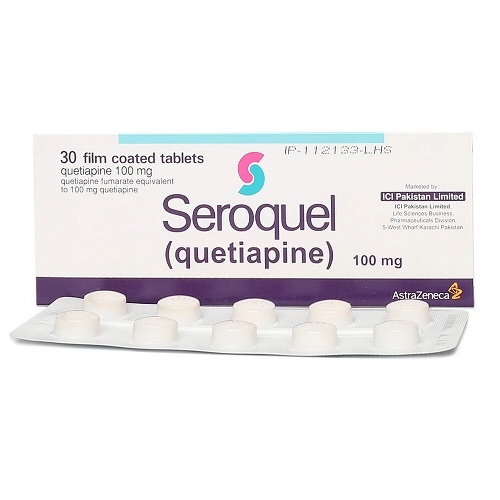
Seroquel (Quetiapine) in the United Kingdom: The Comprehensive Safety and Prescribing Guide
Direct Answer: Can I get Seroquel without a prescription in the UK?
No, it is illegal to obtain Seroquel (quetiapine) without a valid prescription in the United Kingdom. Seroquel is a prescription-only medicine (POM) and can only be dispensed by registered UK pharmacies upon presentation of a prescription from a qualified UK prescriber. Buying Seroquel from unregulated sources is both illegal and dangerous.
Summary: Key Facts About Seroquel
| Parameter | Details |
|---|---|
| Active Ingredient | Quetiapine |
| Legal Status in UK | Prescription-only (POM), regulated by the Medicines and Healthcare products Regulatory Agency (MHRA) |
| Main Uses | Schizophrenia, Bipolar Disorder, Adjunct in Major Depressive Disorder (adults) |
| Common Dosages | 25mg, 50mg, 100mg, 200mg, 300mg, 400mg tablets (immediate and prolonged-release) |
| Onset of Action | 1–2 hours (initial effects) |
| Prescription Required? | Yes |
| Can be split/crushed? | Prolonged-release tablets must not be split or crushed. Immediate-release can be split if scored (check with pharmacist). |
| Generic Available? | Yes (quetiapine), usually less expensive |
| Covered by NHS? | Yes, for approved indications |
What is Seroquel and What Is It Used For?
Seroquel is the brand name for quetiapine, an atypical antipsychotic medicine widely used across the United Kingdom for the management of several mental health conditions. It is licensed by the MHRA and available as both immediate-release (IR) and prolonged-release (PR) tablets.
- Schizophrenia: Seroquel treats positive (hallucinations, delusions) and negative (withdrawal, flat affect) symptoms.
- Bipolar Disorder: Used for both manic and depressive episodes, as well as for maintenance therapy to prevent relapse.
- Major Depressive Disorder (Adjunct): In adults, Seroquel may be added to antidepressants if symptoms persist.
Off-label (non-approved) uses in the UK may include anxiety disorders, insomnia, or some behavioural disturbances, but these should only be considered under the guidance of a mental health specialist.
Empathy Note: If you, or someone you care about, are struggling with mental health symptoms, you are not alone. Many people in Manchester, London, Glasgow, and across the UK benefit from a combination of medication and psychological support. It’s completely normal, and help is available.
How Seroquel Works: Mechanism of Action Explained
Quetiapine belongs to the class of second-generation (atypical) antipsychotics. Its primary action is to modulate neurotransmitters in the brain:
- Dopamine D2 receptor antagonism: Reduces excessive dopamine activity, which is thought to play a key role in psychosis and mania.
- Serotonin 5-HT2A antagonism: Balances mood and reduces psychotic symptoms.
- Noradrenaline reuptake inhibition (at higher doses): May contribute to antidepressant effects.
- Histamine H1 and adrenergic α1 receptor antagonism: Responsible for some sedative and blood pressure effects.
Metaphor: Imagine Seroquel as a “traffic controller” in your brain, guiding chemical messages to their correct destinations and preventing the chaos that can occur when signals go awry.
Does it work instantly? No. Seroquel’s therapeutic benefit develops gradually over days to weeks. Some sedative effects are noticeable sooner.

Pharmacokinetics: Seroquel is well absorbed after swallowing, peaks in blood plasma within 1.5 hours (immediate-release) or 5 hours (prolonged-release), is highly bound to proteins, metabolised in the liver (mainly by CYP3A4 enzyme), and excreted mainly in urine. The effective half-life is roughly 7 hours.
How to Take Seroquel: Dosing, Timing, and Administration
- Starting Dose
-
- Schizophrenia: Typically 50mg twice daily (IR) on Day 1, increased over several days. Usual maintenance dose 300–450mg daily.
- Bipolar mania: Often 100mg at night to start, increasing to 400mg–800mg daily.
- Bipolar depression: 50mg at night initially, up to 300mg daily.
- In elderly or hepatic impairment: Lower starting dose (25mg at night) and slower titration are advised.
- Maximum Dose
-
- Adults: 800mg per day (do NOT exceed unless under specialist supervision).
- Elderly: Maximums are generally lower—often up to 400mg, but always determined individually.
- Peak Effect
- Within 1.5 hours for IR and 5 hours for PR tablets.
- Duration
- Therapeutic benefit is assessed over weeks, not hours. Sedation can be noticed from the first dose.
- Splitting/Crushing Tablets
-
- Immediate-release: May be split if scored. Check with your pharmacist for your brand.
- Prolonged-release: Must NOT be split, chewed, or crushed – doing so risks overdose.
Missed a dose? Take it as soon as you remember, unless it’s nearly time for your next dose. Do not double up.
Food, Alcohol, and Lifestyle Interactions with Seroquel
| Product/Lifestyle Factor | Can it be combined? | Consequences / Notes |
|---|---|---|
| Alcohol | Strongly discouraged | Increased sedation, risk of breathing suppression, accidental injury. Even a small amount may amplify side effects. |
| Grapefruit juice | No | Inhibits CYP3A4 enzyme; may raise Seroquel levels and toxicity risk. |
| High-fat meals | Yes, but with caution | May delay absorption of prolonged-release tablets by 1–2 hours. Take consistently with or without food as advised. |
| Caffeine | Yes (in moderation) | May counteract some sedative effects, but not a significant interaction. |
| Other sedative medicines (e.g., benzodiazepines) | Caution | Risk of excessive sedation and breathing issues—must be supervised by a doctor. |
| Smoking | Yes, but may lower Seroquel levels | Tobacco smoke speeds up Seroquel metabolism. Stopping smoking can require dose adjustment. |
Important: Avoid drinking alcohol while taking Seroquel. Grapefruit juice is also contraindicated. Always check with your pharmacist or doctor before combining Seroquel with any other medication or supplement, including over-the-counter products.
Who Should NOT Take Seroquel? Key Contraindications
Absolute Contraindications (Never Use):
- Known allergy or hypersensitivity to quetiapine or any ingredient in the tablet.
- Concomitant use with CYP3A4 inhibitors (e.g., certain antifungals, some HIV medicines, or grapefruit juice).
- Breastfeeding: Not recommended due to possible excretion in breast milk.
Relative Contraindications (Use With Caution):
- Severe liver impairment: Dose adjustment required, or use may be avoided.
- History of heart rhythm disturbances (e.g., QT prolongation, arrhythmias).
- Uncontrolled epilepsy (may lower seizure threshold).
- Diabetes or pre-diabetes: Seroquel may worsen blood sugar control.
- Elderly patients with dementia-related psychosis: Increased risk of stroke and death (MHRA warning 2024).
- Low blood pressure or risk of fainting: Seroquel can cause postural hypotension.
- History of neuroleptic malignant syndrome: Use with extreme caution and under specialist care only.
Always discuss your full medical history and all medications (including non-prescription products) with your prescriber before starting Seroquel.
What Side Effects Are Most Common with Seroquel?
| Frequency | Side Effect | Mechanism/Comments | What To Do |
|---|---|---|---|
| Very common (>1 in 10) | Drowsiness, dry mouth, headache, weight gain | Histamine blockade; metabolic changes | Often improve with time; discuss if persistent |
| Common (1–10 in 100) | Dizziness, constipation, rapid heartbeat, increased blood sugar | Alpha-adrenergic effect; metabolic impact | Monitor for falls/constipation; annual blood tests |
| Uncommon (1–10 in 1,000) | Swelling, fainting, low blood pressure, abnormal liver enzymes | Vascular and hepatic effects | Report to GP; may require dose adjustment |
| Rare (<1 in 1,000) | Seizures, priapism, severe allergic reactions | Neuronal excitability, hypersensitivity | Seek urgent medical attention |
| Very rare (<1 in 10,000) | Neuroleptic malignant syndrome, severe rash (Stevens-Johnson) | Complex immune or dopaminergic reaction | Stop Seroquel, call emergency services |
Myth: “If I get side effects, I must stop immediately.”
Reality: Many side effects settle after a few days or weeks. Do not stop Seroquel suddenly; always consult your prescriber for advice.
What to watch for: If you notice a rash, swelling of the mouth/throat, persistent high fever, confusion, or muscle stiffness—seek emergency help immediately. For common side effects like drowsiness or mild weight gain, speak to your doctor at your next visit.
How Does Seroquel Compare to Other Mental Health Medicines?
| Parameter | Seroquel (Quetiapine) | Olanzapine | Risperidone |
|---|---|---|---|
| Onset of Effect | 1–2 hours (sedative); 1–4 weeks (full) | 1–2 hours | 1 hour |
| Duration of Action | 12–24 hours | 24 hours | Up to 24 hours |
| Main Side Effects | Drowsiness, weight gain, dry mouth | Weight gain, drowsiness, metabolic changes | Restlessness, sexual dysfunction, increased prolactin |
| Risk of Diabetes | Moderate | High | Low–moderate |
| Cost (NHS) | Covered | Covered | Covered |
| Formulations Available | IR & PR tablets | Tablets, orally disintegrating tablets | Tablets, liquid, injection |
| Unique Advantages | Low risk of movement disorders (EPS), available as PR | Effective for agitation; rapid mood control | Available as depot injection |
| Limitations | Sedation, weight gain, metabolic issues | Very high weight gain risk, cholesterol | Sexual dysfunction, higher EPS risk |
Bottom line: Seroquel is often chosen when sedation is helpful, or when movement side effects from other antipsychotics are a concern. Each medicine has trade-offs. Your prescriber will match your needs and risks to the best option.
How to Legally Obtain Seroquel in the United Kingdom: Step-by-Step
-
Consult your GP or psychiatrist.
Seroquel must be prescribed following a thorough assessment by a registered healthcare professional. This may be your NHS GP, a private psychiatrist, or a mental health clinic. -
Shared decision-making.
If Seroquel is suitable, your clinician will discuss benefits, risks, side effects, and monitoring requirements. -
Prescription issued (NHS or private).
The prescription can be paper or electronic (EPS). NHS prescriptions are usually lower in cost, with a standard charge per item (as of 2026: £9.90 per item in England; free in Scotland, Wales, and Northern Ireland). -
Dispensing at a UK-registered pharmacy.
Only pharmacies registered with the General Pharmaceutical Council (GPhC) are authorised to supply Seroquel. Online pharmacies must display the EU/UK common logo and GPhC registration. -
Repeat prescription and monitoring.
For ongoing treatment, regular reviews (at least annually, often more frequently) are required. Blood tests (glucose, cholesterol, liver, and thyroid function) are standard, as is weight and blood pressure monitoring.
How to Spot Counterfeit or Unsafe Seroquel in the UK
What does genuine Seroquel look like?
- Blister packs with the brand name, dosage strength, and batch number printed clearly.
- Box includes manufacturer details (AstraZeneca or authorised generic supplier), UK marketing authorisation number, and a tamper-evident seal.
- Each tablet is engraved with a code (e.g., “SEROQUEL 100” or “Q 100”).
- Some newer packs feature holograms or QR codes for authenticity (from 2024 UK safety regulations).
Warning signs of counterfeit or unsafe products:
- Loose tablets without packaging or missing patient information leaflet (PIL).
- Misspelt names, unusual fonts, faded or smudged print.
- Prices far below usual UK NHS/private rates.
- Supplied by websites not requiring a prescription, or lacking GPhC registration.
Original vs Generic Seroquel:
- Generics contain the same active ingredient (quetiapine), must meet the same UK safety/quality standards, and are often more affordable.
- Inactive ingredients (“excipients”) may differ between brands. Allergies to excipients are rare, but if you have a known sensitivity, ask your pharmacist to check ingredients.
- Effectiveness and side effect profiles are equivalent as per MHRA regulations.
What Should I Do If I Take Too Much Seroquel?
- Stop taking Seroquel immediately.
- Call 999 (emergency services) or NHS 111 for urgent advice.
- Inform the medical team about the exact dose and time taken.
- Do not attempt to induce vomiting or delay seeking help.
Symptoms of overdose: Severe drowsiness, rapid heartbeat, confusion, low blood pressure, seizures. Overdose can be life-threatening and may require hospital admission for monitoring and treatment.
Frequently Asked Questions: Seroquel in the UK
- Can Seroquel be used every day?
- Yes, Seroquel is intended for regular, daily use as prescribed by your clinician.
- Is Seroquel safe for long-term use?
- Many people in the UK use Seroquel for years, but regular monitoring is essential to minimise risks (e.g., diabetes, weight gain, cholesterol).
- Can I get Seroquel on the NHS?
- Yes. If prescribed for a licensed indication, Seroquel is available on the NHS in England, Scotland, Wales, and Northern Ireland.
- What if I need to stop taking Seroquel?
- Do not stop suddenly as withdrawal symptoms (insomnia, nausea, agitation) may occur. Your doctor will advise a gradual reduction plan.
- Are there any interactions with herbal supplements?
- Some herbal products (like St John’s Wort) may affect Seroquel’s metabolism and efficacy; always check with your doctor or pharmacist.
- Does Seroquel affect driving or operating machinery?
- Yes. Seroquel can cause drowsiness, especially at the start of treatment or after dose increases. Do not drive until you know how it affects you.
- Can Seroquel cause dependence or withdrawal?
- Seroquel is not considered addictive in the traditional sense, but abrupt discontinuation can lead to withdrawal symptoms. Always reduce gradually under medical advice.
- What happens if Seroquel does not help my symptoms?
- Speak to your prescriber. Dose adjustments or alternative therapies may be needed. Do not change your dose or stop on your own.
References
- National Institute for Health and Care Excellence (NICE). “Quetiapine for the treatment of schizophrenia and bipolar disorder”. Accessed June 2026. https://www.nice.org.uk/guidance/ta243
- Medicines and Healthcare products Regulatory Agency (MHRA). “Seroquel (quetiapine) summary of product characteristics”. Updated April 2026. https://www.medicines.org.uk/emc/product/1764/smpc
- British National Formulary (BNF). Quetiapine entry, June 2026. https://bnf.nice.org.uk/drugs/quetiapine/
- National Health Service (NHS). “How to spot a fake medicine”. Accessed June 2026. https://www.nhs.uk/live-well/healthy-body/how-to-spot-a-fake-medicine/
- Lally J, MacCabe JH. “Antipsychotic medication in schizophrenia: a review.” Br Med Bull. 2023; 145(1): 77–89. https://academic.oup.com/bmb/article/145/1/77/7193444
- Wykes T, et al. “Long-term outcomes with antipsychotic medication: UK real-world data.” Lancet Psychiatry. 2024; 11(3): 234–241. https://www.thelancet.com/journals/lanpsy/article/PIIS2215-0366(24)00078-2/fulltext